
Whole Hormonal Support for your unique biology.
DiaFem goes beyond symptoms — we support your whole hormonal system.
Go beyond symptom care with continuous daily support — backed by the latest women's health science.
-

01 Clinical protocol
Our clinicians review your full health picture: your symptoms, your labs, your cycle data, and creates a personalized protocol just for your current phase.
-

02 Daily companion
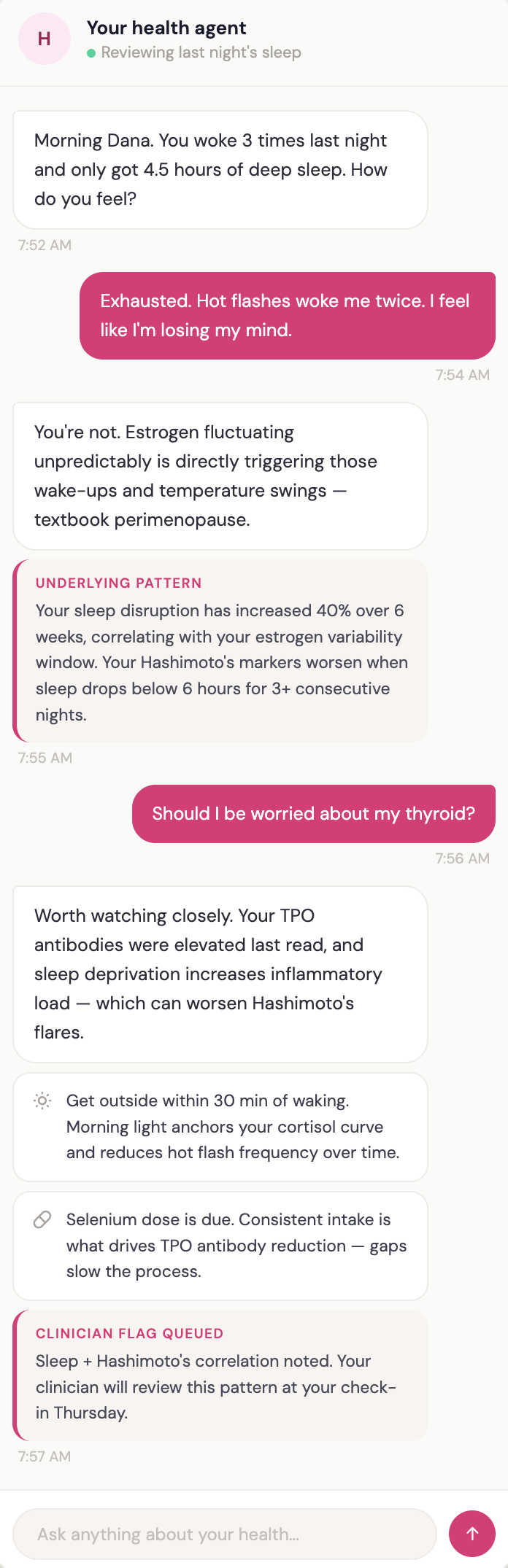
A smart daily companion that tracks what matters at every phase — hormones, metabolism, sleep, mood, and inflammation — and delivers personalized guidance every single day. No logging, no remembering. Just talk.
-
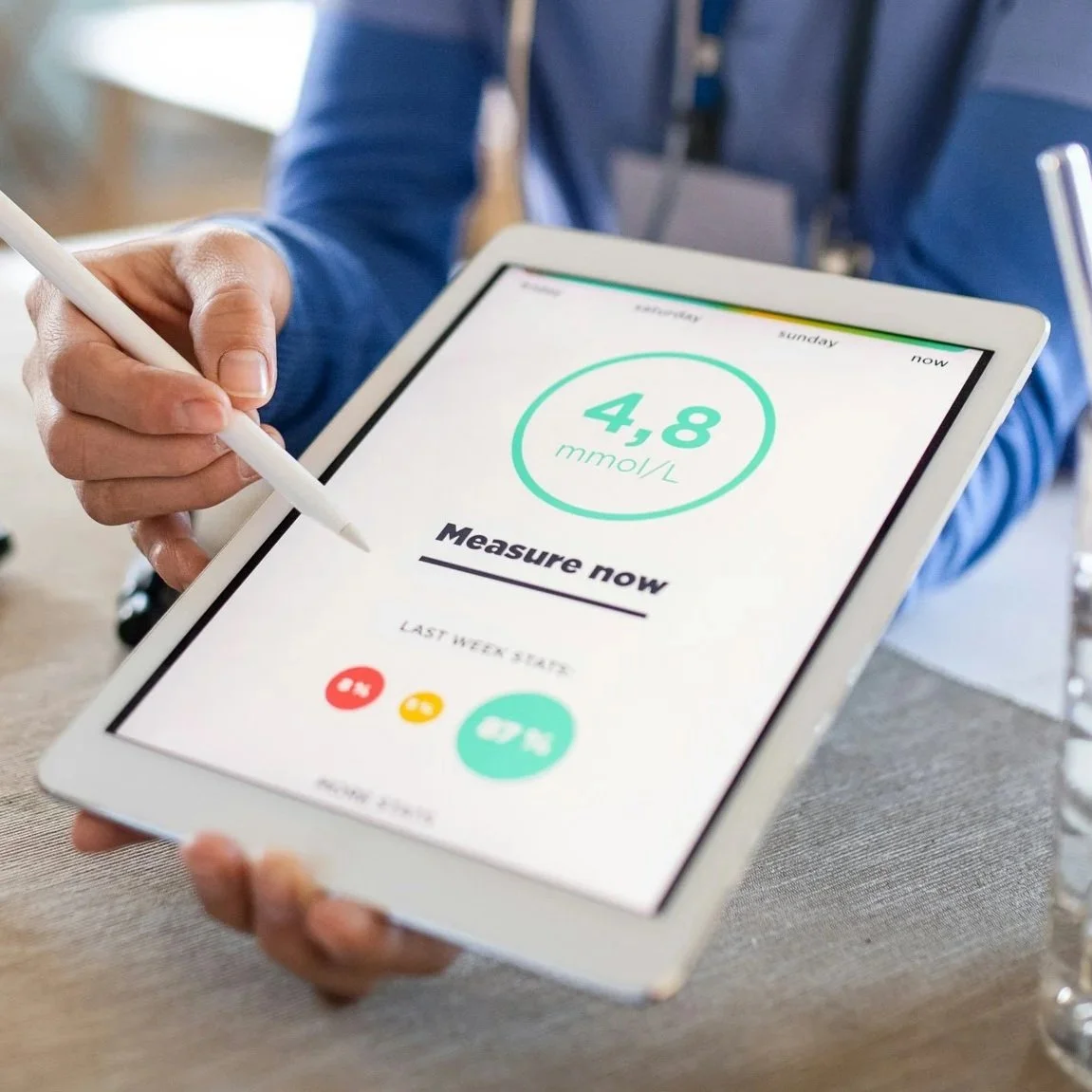
03 Health forecast
We connect your daily tracking data to your underlying health picture — identifying patterns beneath your symptoms and forecasting what your body needs next, before it becomes a problem.
Your Health Agent, Real Conversations.
HIPAA, SOC 2, GDPR, CCPA, and SSL compliant. Your data is protected at every level.
Know Your Body

-
What’s happening:
Your hormones are establishing themselves — and the first signs of imbalance are already showing up.Why you should care:
If ignored, this leads to painful & unpredictable periods, unexplained weight gain, low energy, mood swings, anxiety, and fertility problems down the road.Your Protocol:
Track your cycle, mood, sleep & energy daily. Build protein-rich meals, start movement habits early, and catch warning signs before they grow into bigger problems.LEARN MORE
-
What’s happening:
Your hormones are establishing themselves — and the first signs of imbalance are already showing up.Why you should care:
If ignored, this leads to painful & unpredictable periods, unexplained weight gain, low energy, mood swings, anxiety, and fertility problems down the road.Your Protocol:
Track your cycle, mood, sleep & energy daily. Build protein-rich meals, start movement habits early, and catch warning signs before they grow into bigger problems.LEARN MORE
-
What’s happening:
Your hormones are establishing themselves — and the first signs of imbalance are already showing up.Why you should care:
If ignored, this leads to painful & unpredictable periods, unexplained weight gain, low energy, mood swings, anxiety, and fertility problems down the road.Your Protocol:
Track your cycle, mood, sleep & energy daily. Build protein-rich meals, start movement habits early, and catch warning signs before they grow into bigger problems.
LEARN MORE
Reserve your spot
Limited spots open